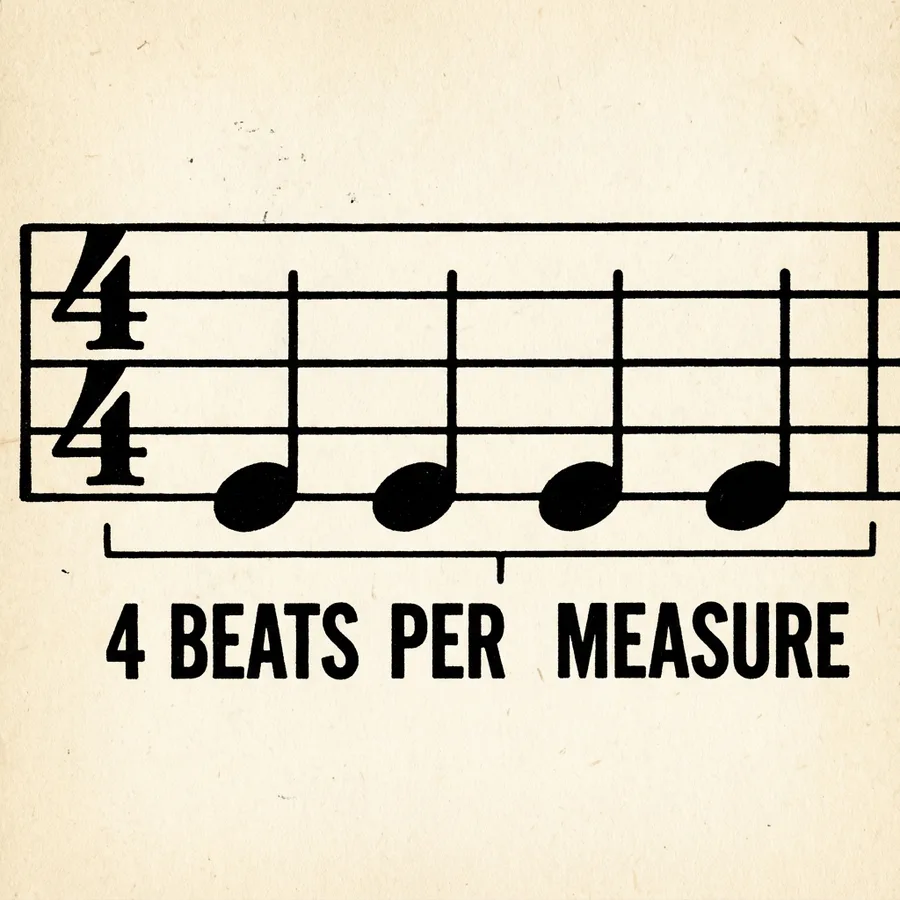
Module 7: Rhythm & Notation
The Map of Sound
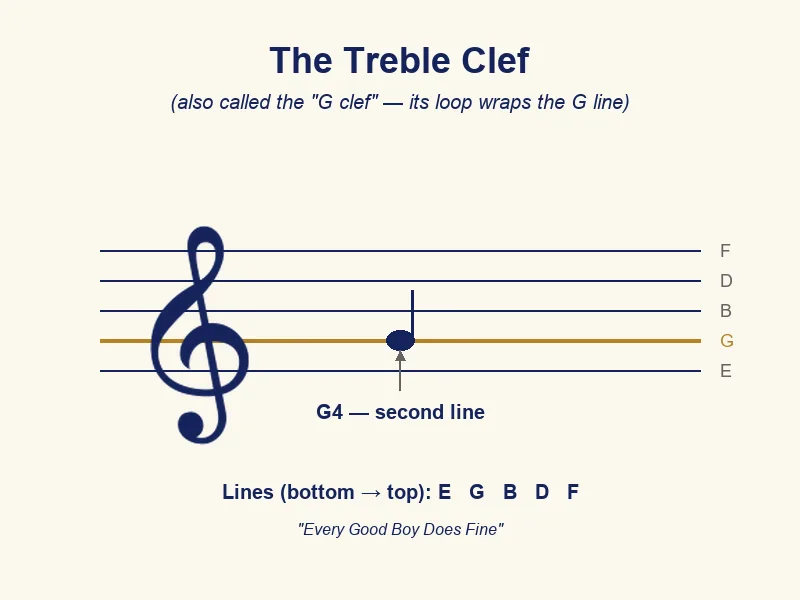
Music is sound in time. Notation is just the map. The Treble Clef (the swirl) is also called the 'G Clef' because the swirl wraps around the second line, defining it as 'G'. Since we play a high-pitched instrument, we live in Treble Clef.
The Heartbeat (Pulse)
Rhythm requires an internal clock. You must feel the beat physically.
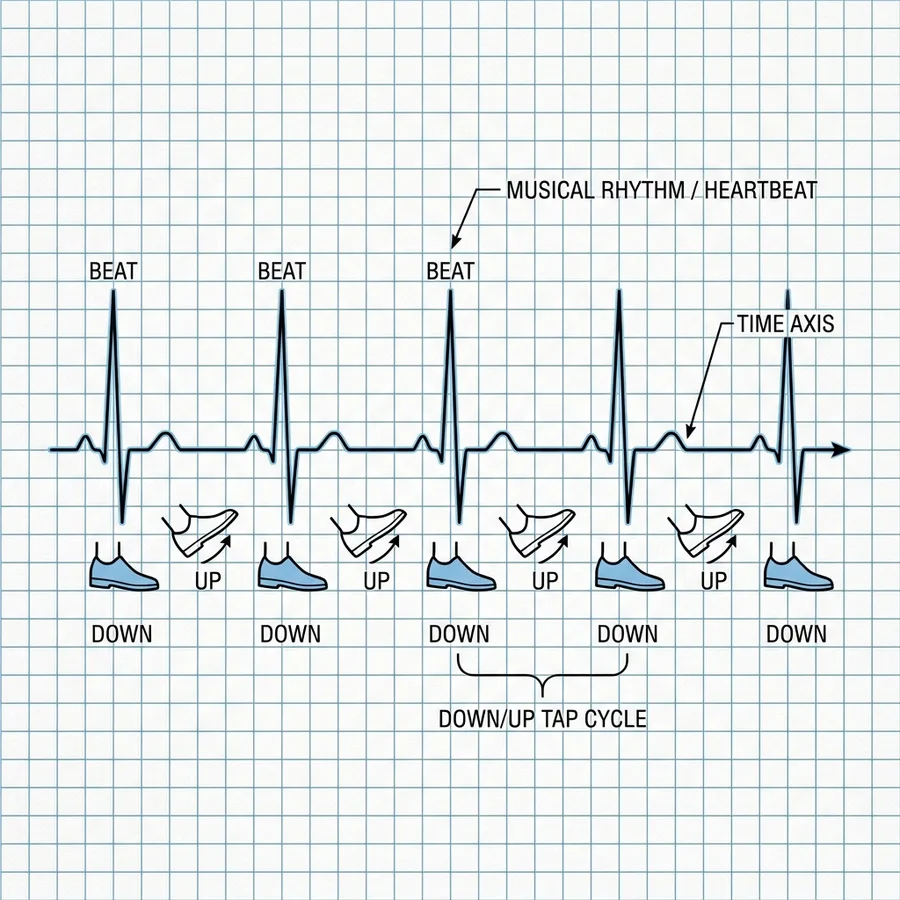
Tap your foot. Down, Up, Down, Up. The 'Down' is the beat. The 'Up' is the 'And'. Without this physical grid, you will get lost.
Note Math (Fractions)
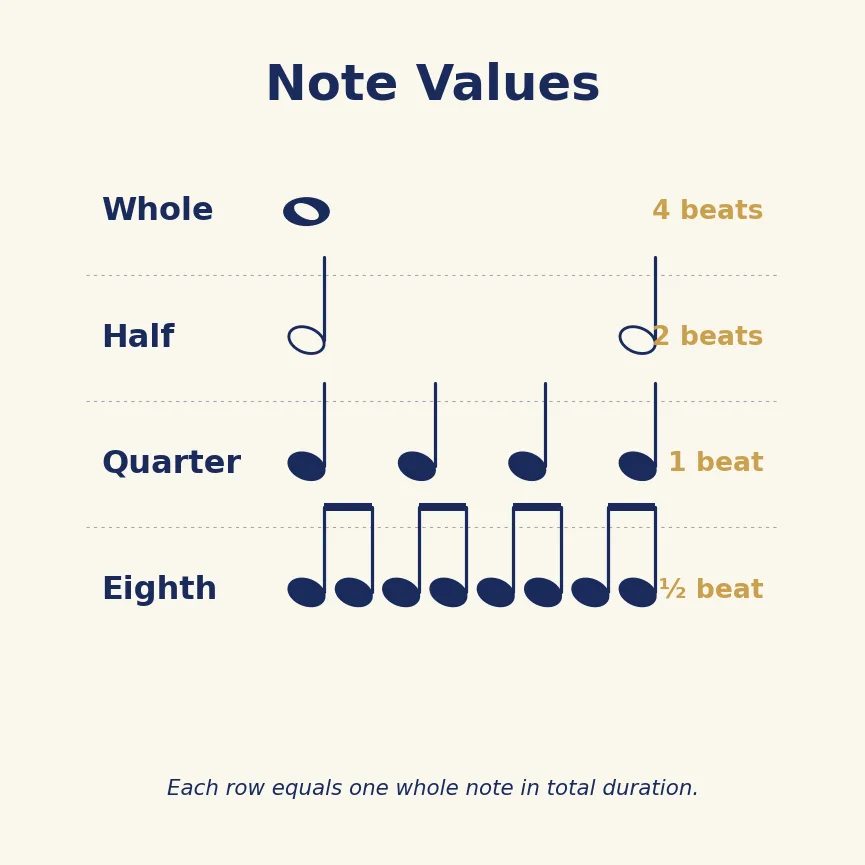
It's simple division logic based on the number 4:
- Whole Note (O): 4 Beats. A full circle. Open sound.
- Half Note (d): 2 Beats. A circle with a stem.
- Quarter Note (♩): 1 Beat. A filled dot with a stem. This is the standard 'step'.
- Eighth Note (♪): 1/2 Beat. Uses a flag. Two make one beat.
Time Signature: 4/4
The Fraction at the start of the music tells you the rules.
Top Number (4): How many beats in a measure? (Count to 4).
Bottom Number (4): Which note gets the beat? (The Quarter note).
Think of measures like train cars. Each car holds exactly 4 passengers (Quarter notes). You can swap 2 passengers for 1 large one (Half note), but the total capacity is fixed.