Module 8: Dynamics (Volume)
Amplitude vs Frequency
Physics Lesson:
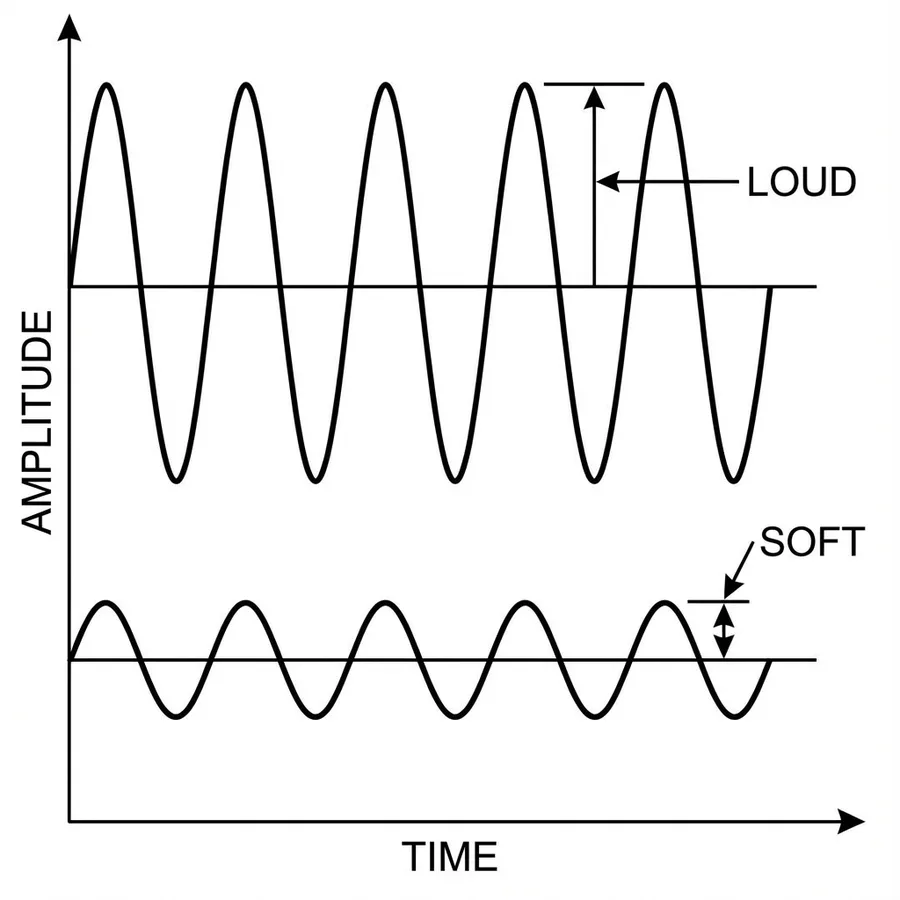
- Pitch: The speed of vibration (Frequency). High notes = Fast vibration.
- Volume: The size of the vibration (Amplitude). Loud notes = Wide vibration.
To play louder, you do not just blow 'harder'. You must open your aperture slightly to allow the lip to travel a greater distance back and forth.
The Italian Code
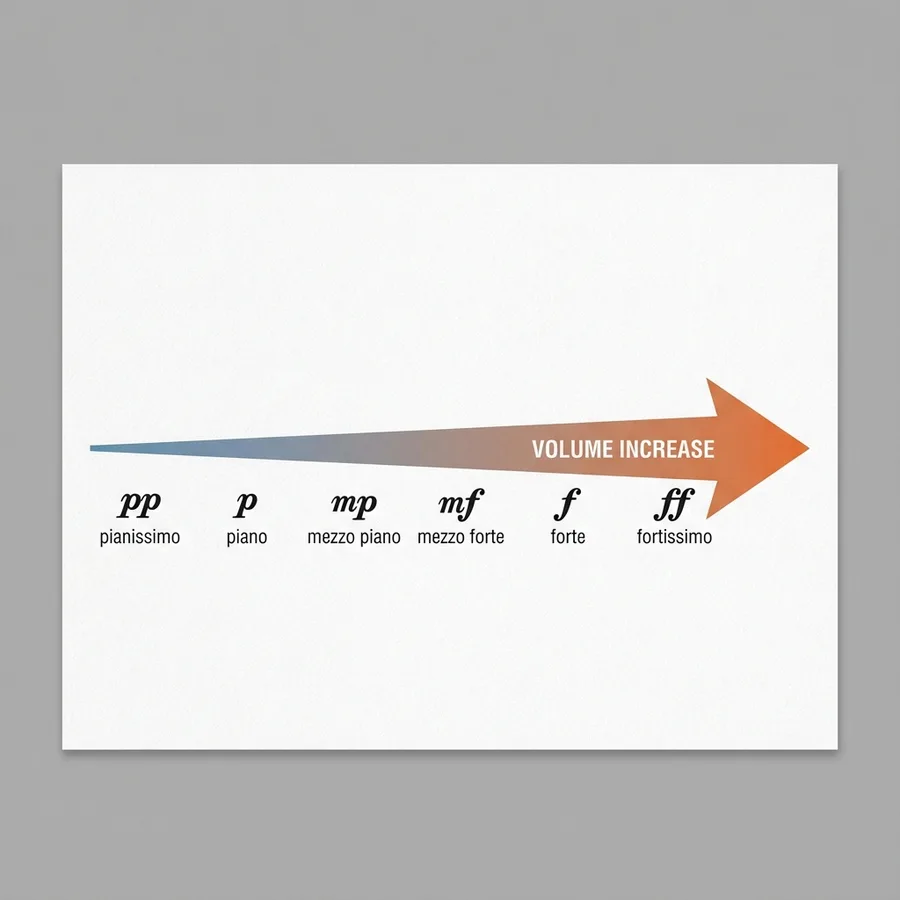
Composers used Italian to tell us how loud to play. Memorize these:
- pp (Pianissimo): Very soft. A whisper.
- p (Piano): Soft. Secret conversation.
- mf (Mezzo Forte): Medium Loud. Normal speaking.
- f (Forte): Loud. Calling a dog.
- ff (Fortissimo): Very Loud. Shouting.
Quantity vs Speed
Gold Standard Rule: Volume comes from the QUANTITY of air. Pitch comes from the SPEED of air.
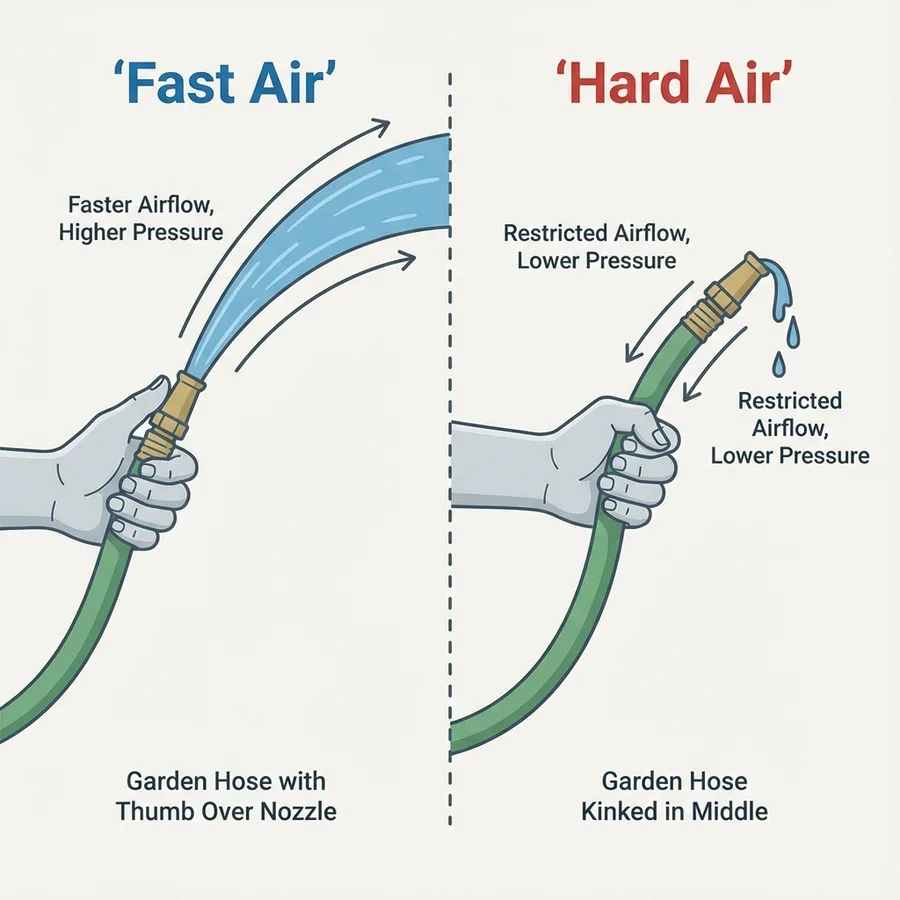
Imagine a garden hose. To spray further (Higher pitch), you put your thumb over the end (Compression). To flood the garden (Louder volume), you open the tap fully (More water volume).
Common Mistake: Beginners squeeze to play loud. This is wrong. You must RELAX to play loud, to let the air pass.